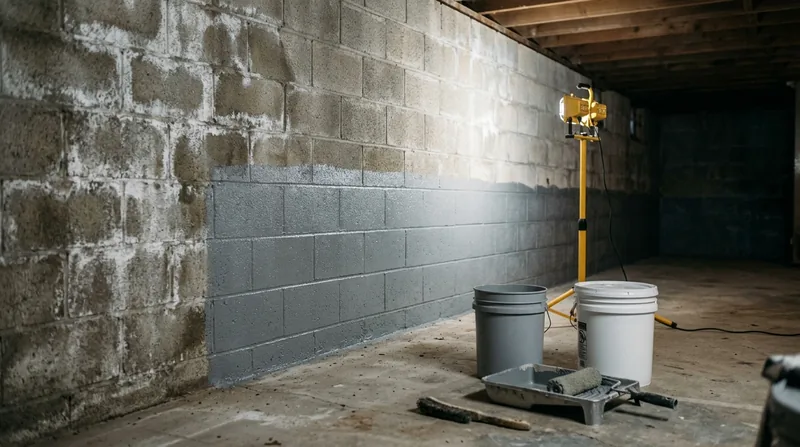




Durham sits on red Piedmont clay and, across much of the city, heavy gray Triassic Basin clay that swells when wet and shrinks when dry. That soil pushes hard against basement walls in Trinity Park, Watts-Hillandale and Forest Hills, where 1900s-1930s bungalows and foursquares sit on raised brick-pier or block foundations with partial cellars. In Hope Valley and Northgate Park, 1950s-1970s brick ranches have shallow lower levels that show damp first. If you need Basement Wall Sealing in Durham, we start by telling you whether a sealer will actually solve the problem or whether hydrostatic pressure is the real driver. Call (984) 329-0255 for a free basement inspection. See our basement waterproofing service page for the full picture.
Why Basement Wall Sealing Matters in Durham's Clay and Old Foundations
The failure mode that dominates here is wall seepage after summer thunderstorm downpours and hurricane remnants, when Triassic Basin clay saturates and holds water against the foundation. Older block and brick walls in Old North Durham and Walltown wick that moisture inward and leave white efflorescence on the face. Sealers help with surface dampness and minor capillary seepage, but they cannot hold back a rising water table or hydrostatic pressure. That distinction decides the right repair.
- Efflorescence and chalky bloom on block walls point to moisture moving through the masonry, not a surface stain.
- Damp patches that spread after rain usually mean wall seepage, which a penetrating sealer can slow.
- Water pooling at the wall base or a musty basement smell after storms signals hydrostatic pressure and often a failed drain tile.
- Hairline cracks that weep need injection, not paint, because a sealer bridges nothing.
- Downspout extension and grading fixes at the surface are part of the job, not an upsell.
We test the wall before we recommend a product, because sealing a wall that is actively under pressure traps moisture and makes the problem worse.
Key info: A 1920s foursquare in Watts-Hillandale had efflorescence on three block walls and a damp band at the base after every storm. The owner wanted sealer. Our inspection found water entering at the wall-floor joint, so we recommended an interior perimeter drain and sump basin instead. Sealing alone would have hidden the symptom for one season.
For permit questions on structural or drainage work, verify locally with the City of Durham Building Department, since rules vary by jurisdiction. General guidance on moisture and foundations is available from InterNACHI's basement waterproofing reference.
How We Approach Basement Wall Sealing in Durham Homes
We work from the outside in and the bottom up. First we find where the water is actually coming from, then we prep the wall, then we seal. On poured-concrete walkouts in Chapel Hill and Hillsborough, that often means treating cold joints and form-tie holes. On old brick and block in Durham, it means repointing and parging before any sealer goes on.
- We inspect the wall face, the wall-floor joint and the exterior grade, and we check the drain tile and sump pump if present.
- We remove efflorescence with a dry brush and a mild acid wash, then let the masonry dry fully.
- We repair cracks by epoxy or polyurethane injection with injection ports before sealing.
- We apply a penetrating sealer for damp masonry or a membrane sealer for minor seepage, depending on the wall.
- We extend downspouts and correct grading so roof water leaves the foundation.
- We leave you a written note on what we sealed and what still needs monitoring.
If the inspection shows active pressure, we say so and point you to the right repair rather than sell a sealer that cannot work.
Key info: A split-level in Duke Park had a damp lower wall that the owner assumed was condensation. Our inspection found a clogged footing drain and a dead sump pump. We sealed the wall after the drainage was corrected, and the damp stopped. For homes in that situation, see our sump pump installation page.
Sealing Methods We Use and When Each One Fits
No single product handles every wall. We match the method to the wall material, the moisture source and the budget, and we tell you plainly when sealing is the wrong answer.
| Approach | Description | Best for |
|---|---|---|
| Penetrating sealer | Soaks into masonry and blocks capillary movement without a surface film. | Damp brick and block walls with efflorescence. |
| Membrane sealer | Flexible coating that bridges hairline cracks and resists minor seepage. | Poured walls with light seepage and no active pressure. |
| Epoxy injection | Structural fill for cracks that are stable and not moving. | Non-active shrinkage cracks in poured concrete. |
| Polyurethane injection | Foam that expands and seals cracks that are actively weeping. | Wet, leaking cracks under pressure. |
| Parging and repointing | Repairs deteriorated mortar and block faces before sealing. | Older brick and block foundations in Durham. |
When the wall is bowing or the crack is structural, sealing is not the repair, and we refer you to our foundation crack repair page.
Basement Wall Sealing Cost in Durham: What to Expect
Most basement wall sealing jobs in Durham start from $1,500, and that figure covers surface prep, efflorescence removal, crack treatment and sealer on a typical basement wall run. The number moves with wall length, wall material, how much prep the masonry needs, and whether cracks require injection first. A 1920s block cellar in Walltown takes more prep than a 1990s poured wall in south Durham.
- Wall length and height drive material and labor more than any other factor.
- Brick and block walls need repointing and parging, which adds time.
- Active cracks need injection before sealing, and that is priced separately.
- Access matters: a finished basement means moving contents and protecting floors.
- Drainage corrections at the surface are quoted as part of the scope, not hidden.
Get two or three written estimates and compare scope, not just the bottom line. Our pricing overview shows how we build a number.
What to Look for When Hiring a Waterproofing Contractor Near Durham
Basement wall sealing near me is a search that returns plenty of general handymen and painters. The work is below grade and specific, so check for a contractor who does this every day, carries liability and workers' comp coverage, and will put the scope in writing. Ask for references from Durham jobs on similar wall types, not just photos of clean new walls.
- Confirm the license and insurance certificate before work starts, and keep a copy.
- Get at least three estimates and compare what each one includes.
- Ask whether permits are needed for any structural or drainage work, and verify with the City of Durham Building Department.
- Check HOA rules for exterior work and discharge locations before scheduling.
- Call references and ask how the wall performed through a full storm season.
Reach us through our contact page to schedule a free inspection.
Basement Wall Sealing in Durham: Pricing Guide
| Service | Price | Details |
|---|---|---|
| Penetrating sealer, single wall run | Starting at $1,500 | Includes prep, efflorescence removal and sealer on a typical basement wall run. |
| Membrane sealer with crack prep | Starting at $2,200 | Adds flexible coating and hairline crack treatment for poured walls with light seepage. |
| Brick or block wall with repointing | Starting at $2,800 | Covers parging and repointing before sealing on older Durham masonry foundations. |
| Crack injection before sealing | On estimate | Epoxy or polyurethane injection priced by crack length and activity. |
| Travel | Included | In Durham and surrounding areas, no separate call-out or mileage fee. |
| Estimate | Free | Response within 24h at (984) 329-0255, no obligation to book. |
Indicative pricing, the exact cost depends on square footage, finish, and site access. Free personalized estimate within 24h at (984) 329-0255.


